
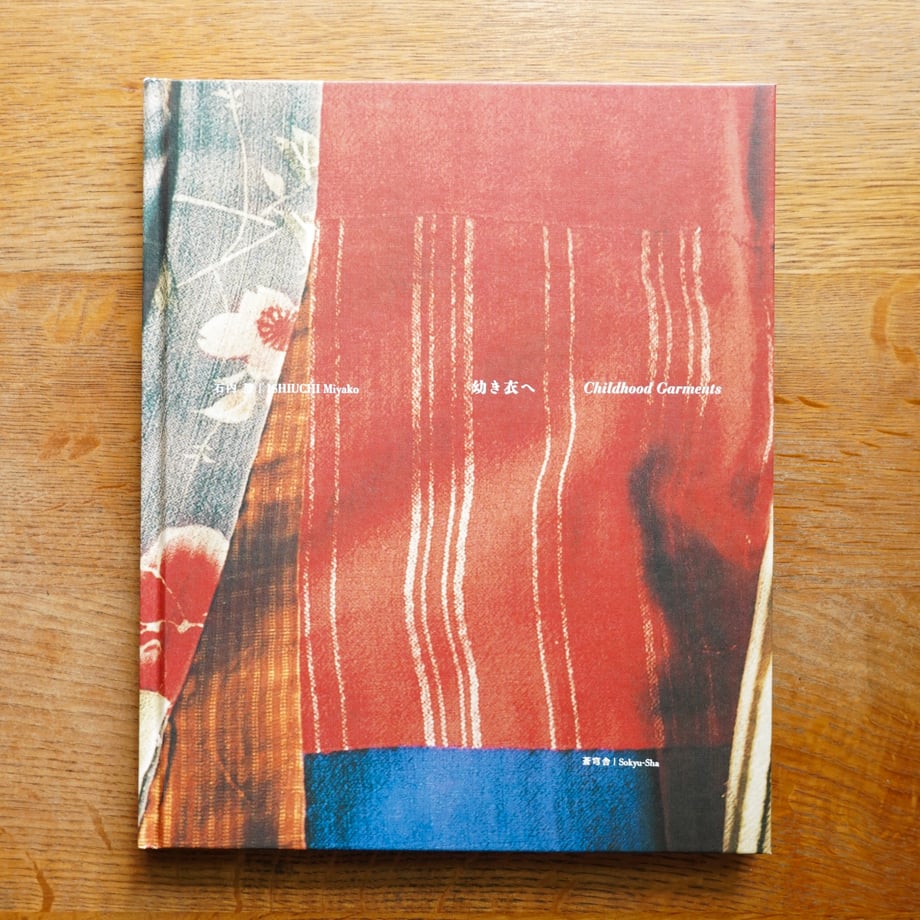
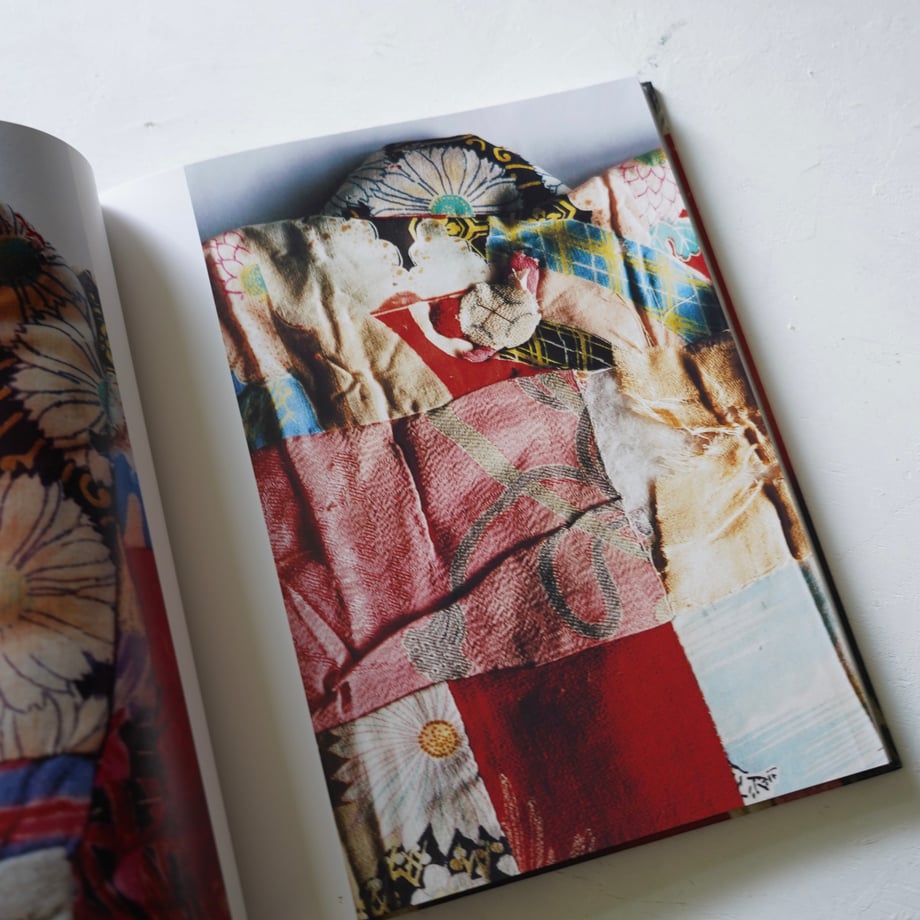
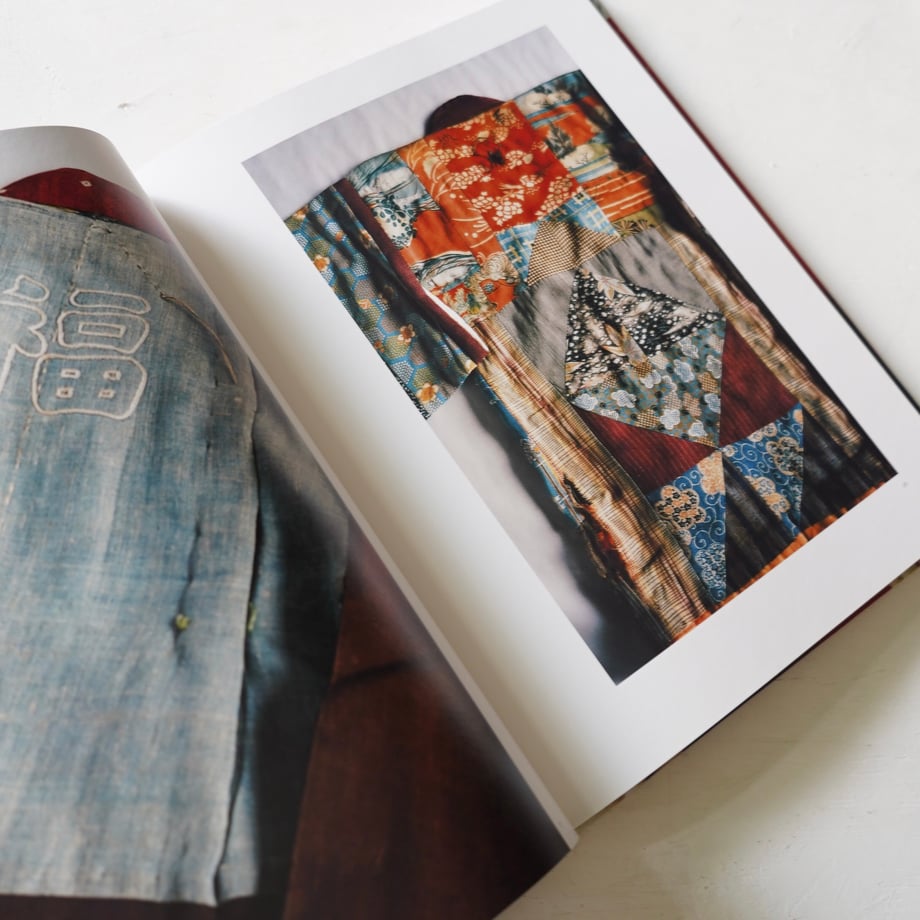
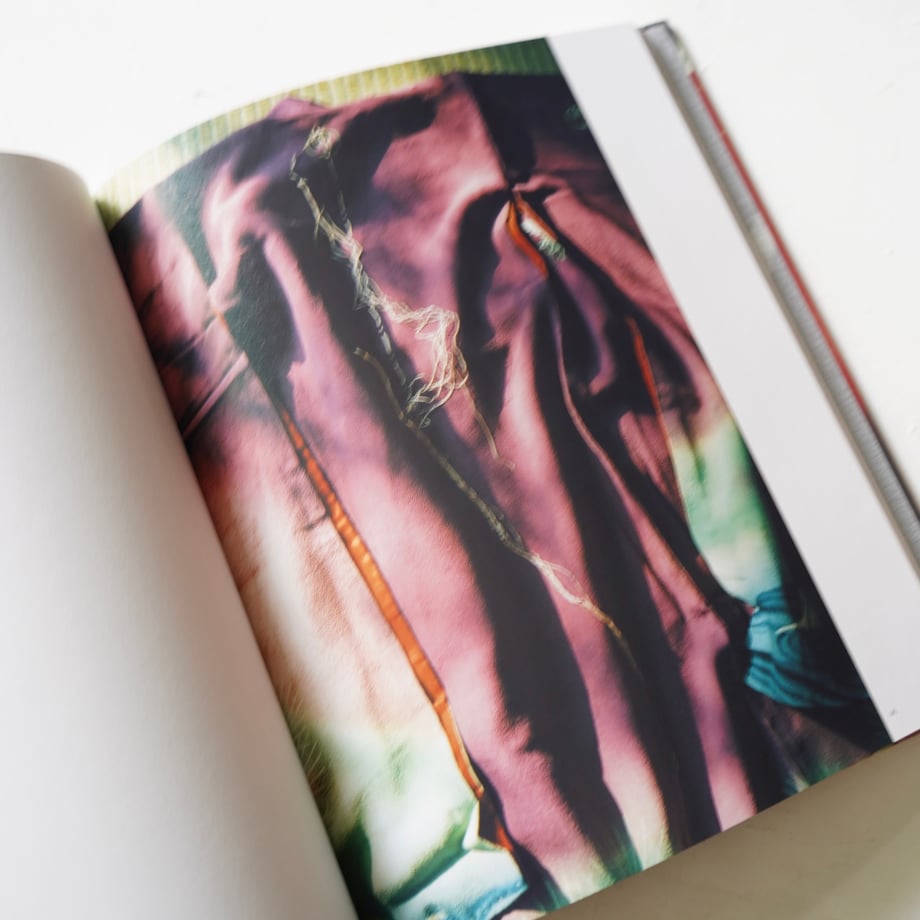
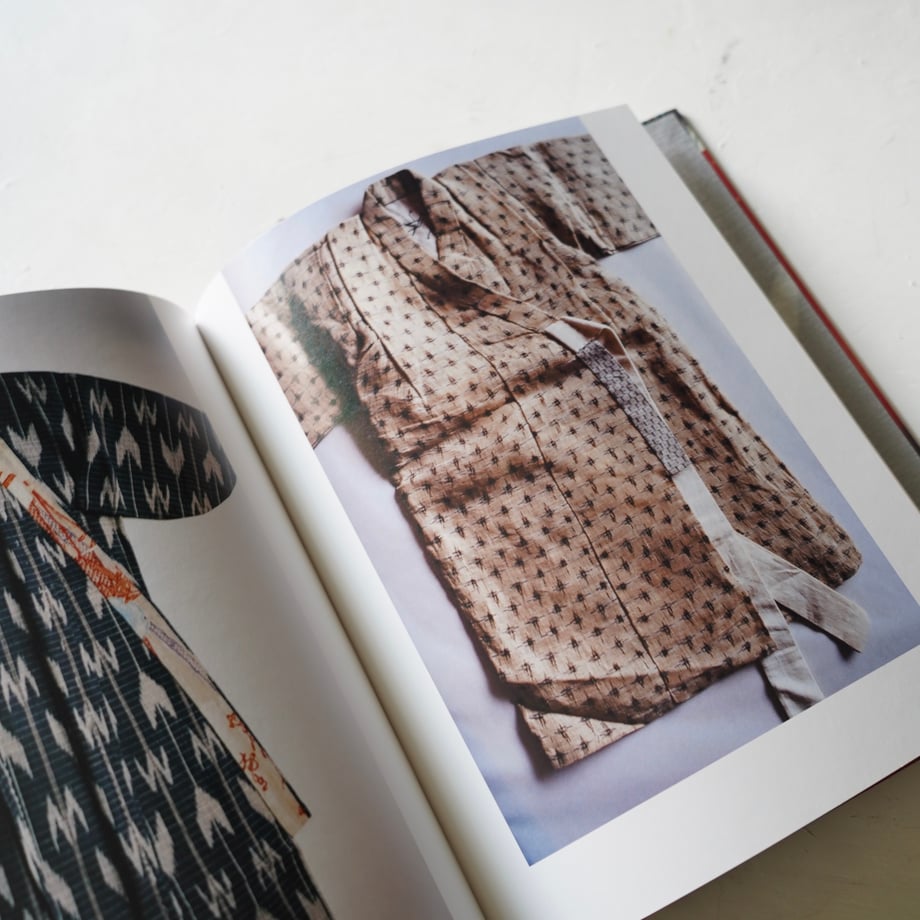
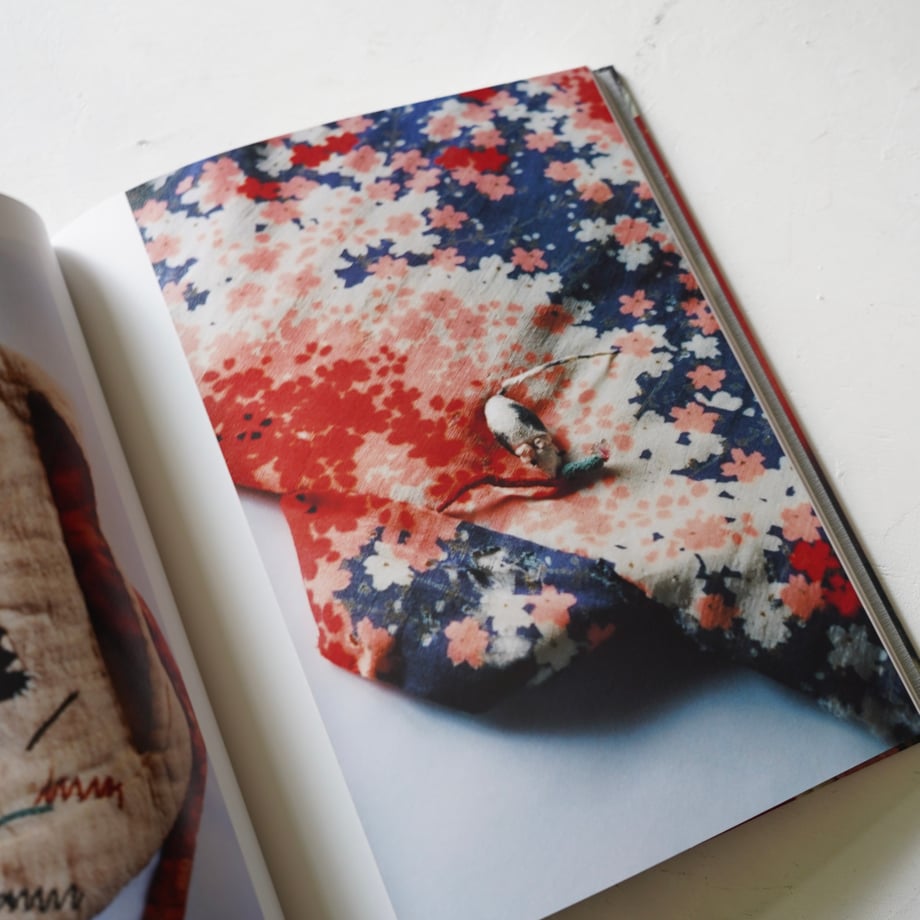
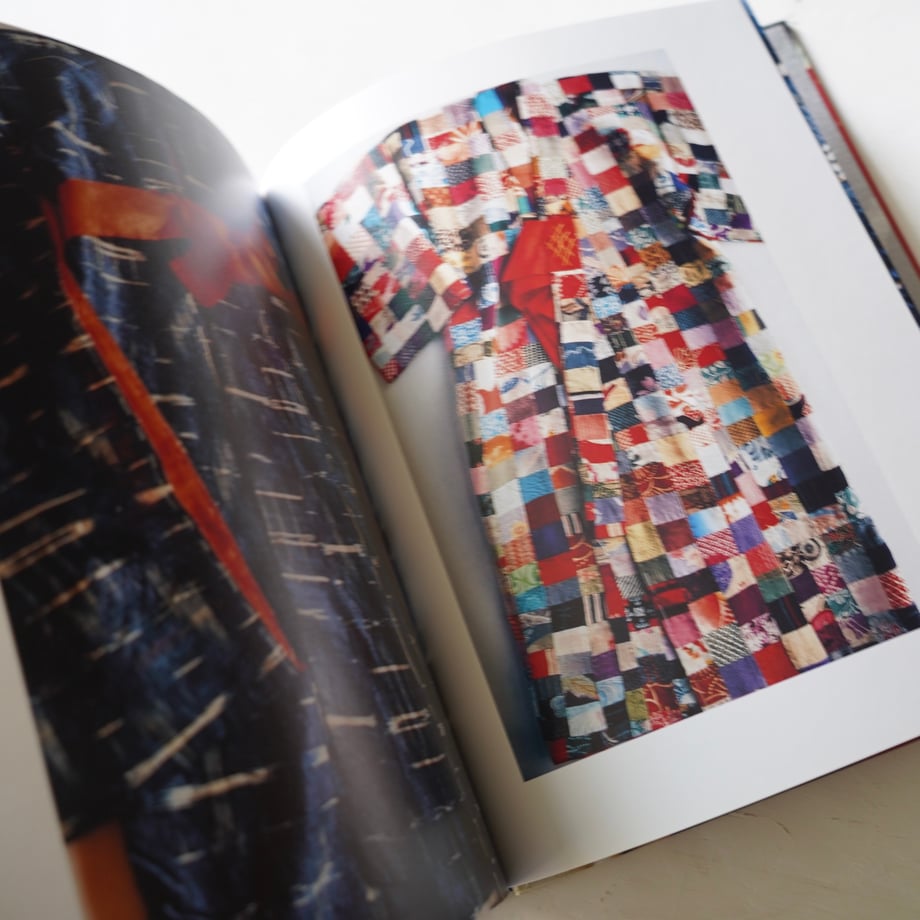
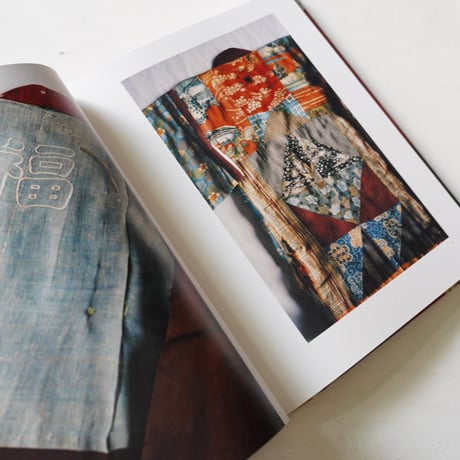
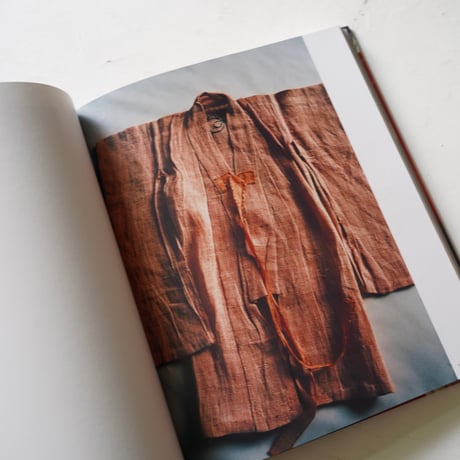
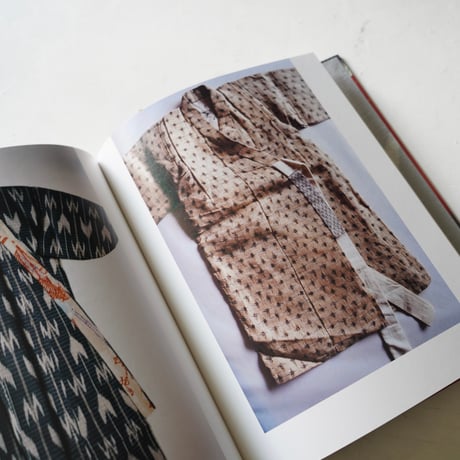
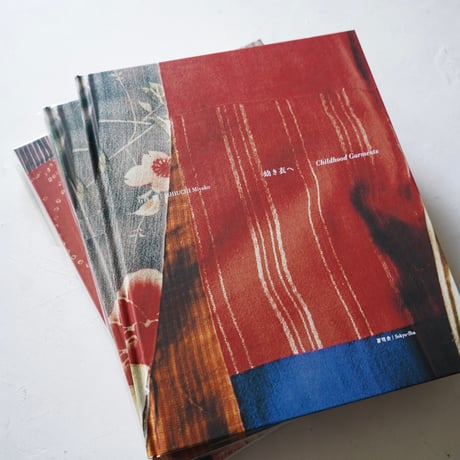
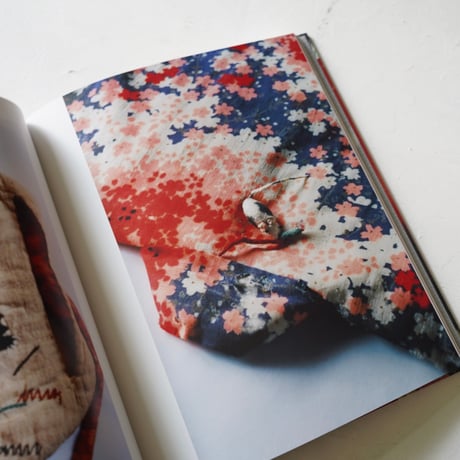
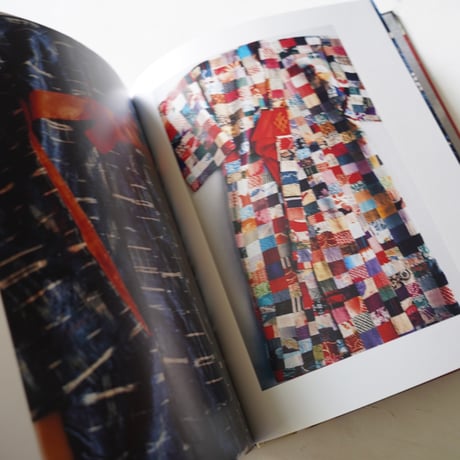
金沢に江戸時代から伝わる子供のための着物「百徳着物」は子供の健やかな成長を願い、百軒から着物の端切れをもらい縫い合わせた着物。
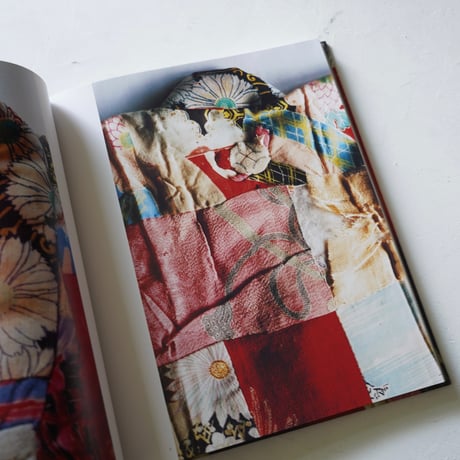
背守りは、子供の着物の背中に縫い付けた魔除けのこと。
昔の人は、人間の魂は背中から出入りすると考えていました。
生まれてきた赤ちゃんの3人に1人は生き延びることができなかった時代、どちらもお母さんたちが子供の健康を願う昔ながらの風習でした。
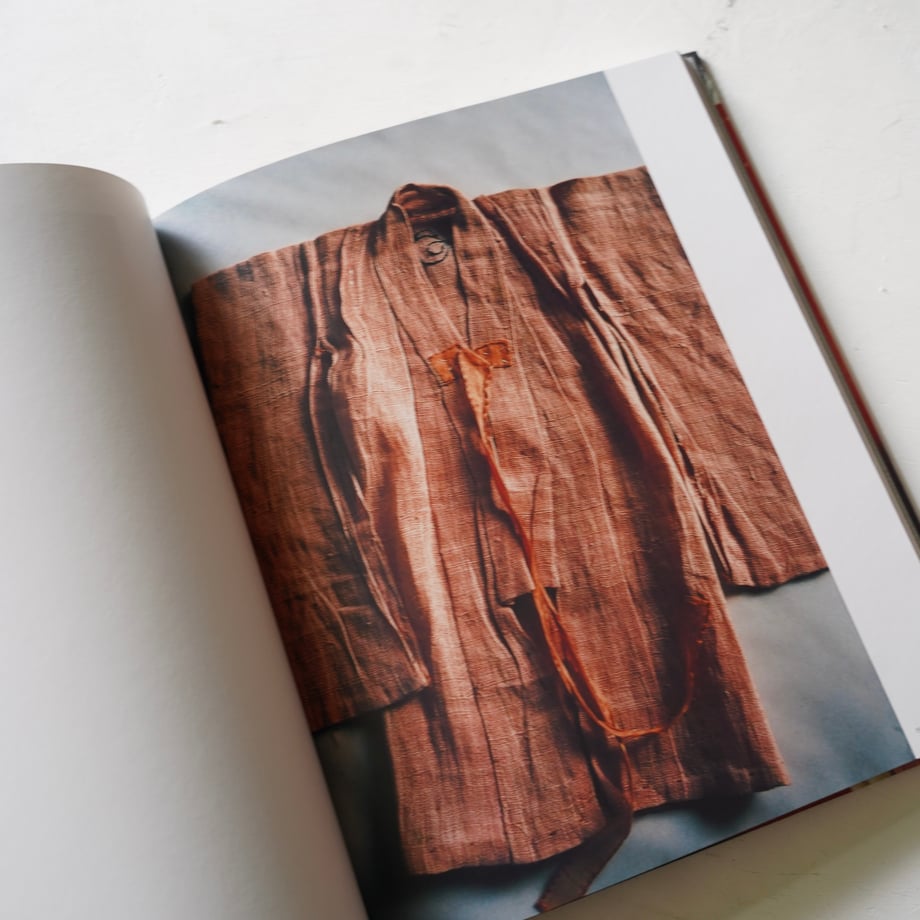
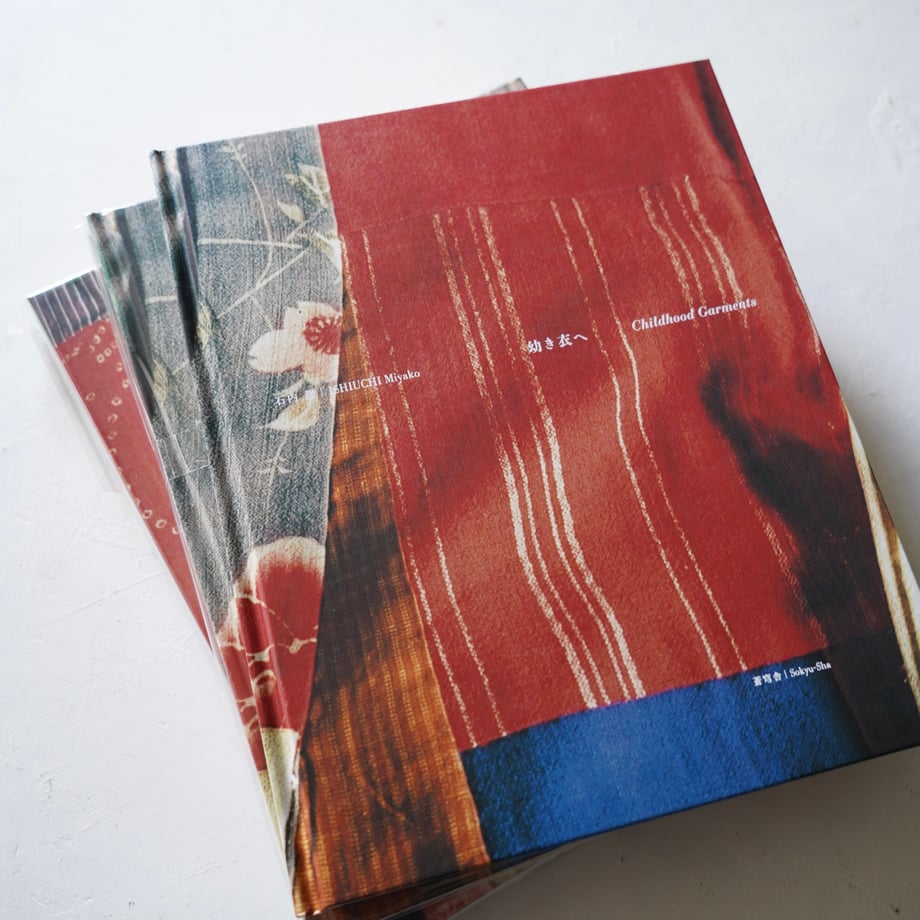
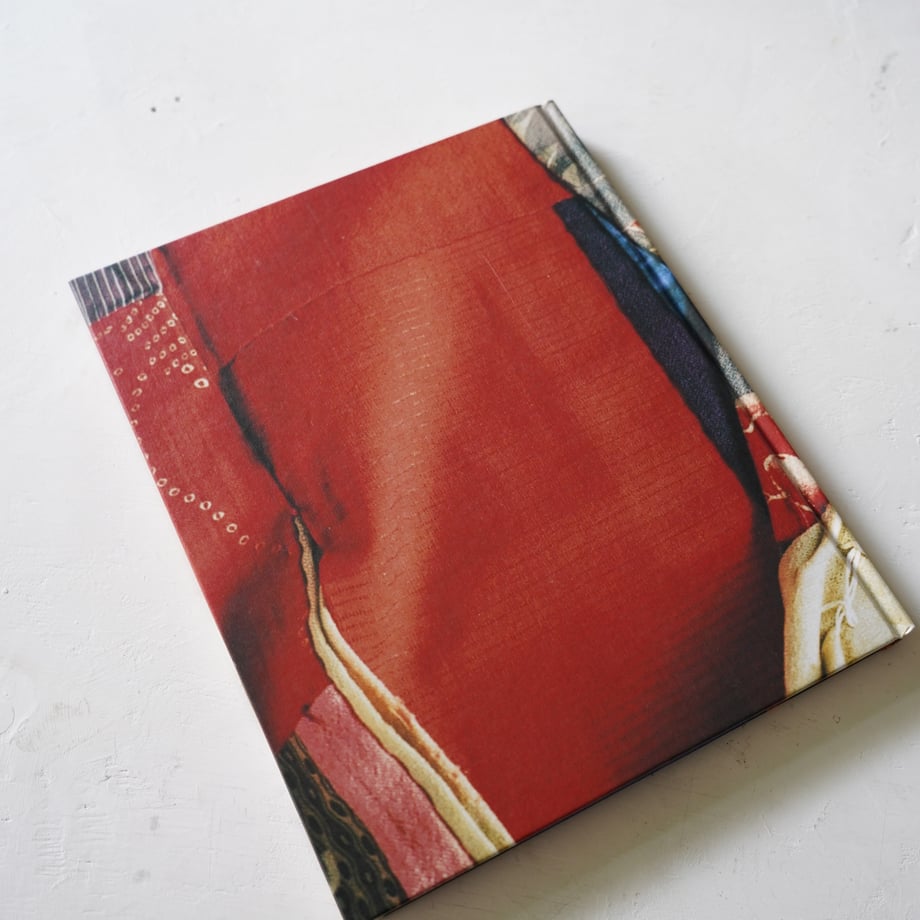
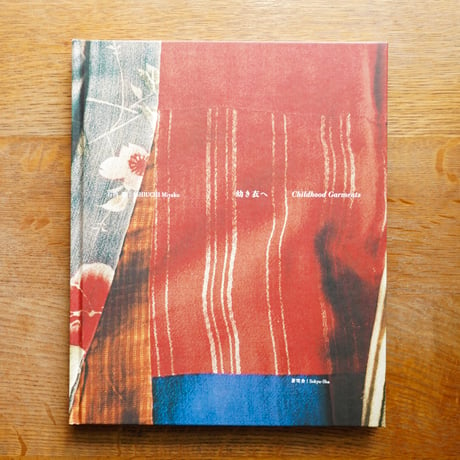
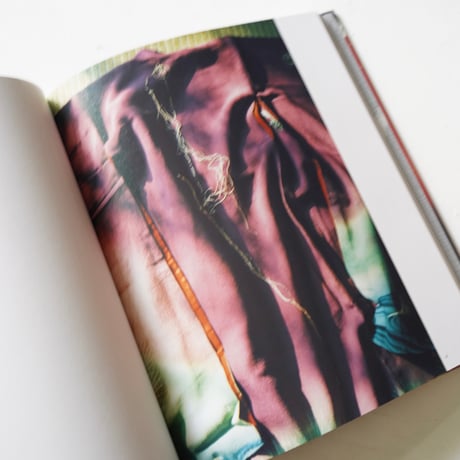
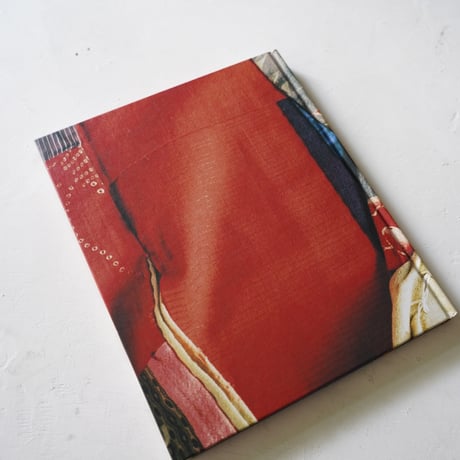
広島の被爆遺品や、母の遺品、身体の傷跡を接写し、心に迫る写真を発表してきた写真家の石内都による、昔の子供のための古い着物の写真集です。
ーー
ここにある幼き衣たち「百徳着物・背守り」は100年の歳月を超えて存在しているものが多い。 触れると崩れるかというとそんな感じはない。 意外にひどい傷みや汚れ、傷跡が見受けられない。 むしろ時を纏った小さな神のような光を放っている。 (あとがき「命の衣」より)
Condition: New 新刊
Publisher: 蒼穹舎 Sokyu-sha
Year: 2016
94 pages
270*220 mm
The Hyakutoku Kimono, a traditional kimono passed down since the Edo period in Kanazawa, was made for children with hopes for their healthy growth. It was sewn together from fabric scraps collected from a hundred households.
The semamori is a protective charm stitched onto the back of a child’s kimono. In olden times, it was believed that the soul entered and exited through the back of the body.
In an era when only one in three babies survived after birth, both the Hyakutoku Kimono and the semamori were traditional customs by which mothers prayed for their children’s health and survival.
This photo book, created by a photographer known for emotionally stirring images of Hiroshima bombing relics, a mother’s keepsakes, and close-up photographs of scars on the human body, features old children’s kimonos from long ago.
![Andreas Gurskey Architecture [古書]](https://imagedelivery.net/QondspN4HIUvB_R16-ddAQ/68c16b4de7d7229e45e5353a/ad27e4b4d9852f373975.jpeg/fit=cover,w=200,h=200)